

Coming Soon
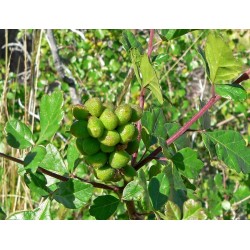
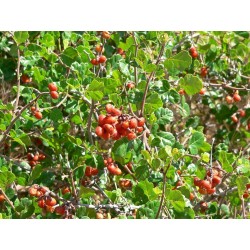
A low deciduous shrub that offers attractive flowers in spring and bright fruits and foliage in fall, skunkbush sumac is native to western North America. In mid-spring before
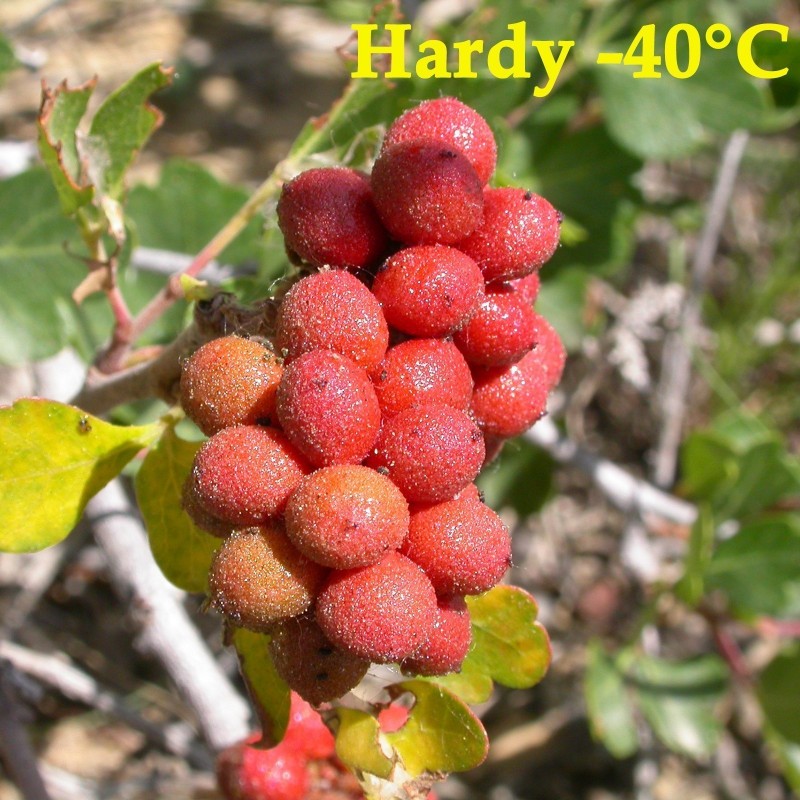
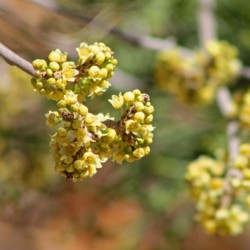
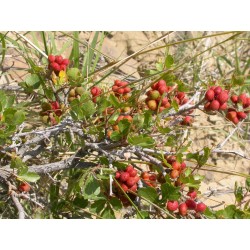
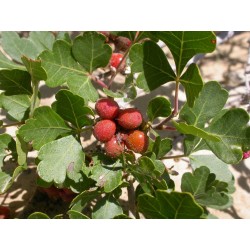
A low deciduous shrub that offers attractive flowers in spring and bright fruits and foliage in fall, skunkbush sumac is native to western North America. In mid-spring before the leaves emerge, conspicuous clusters of pale yellow flowers appear at the stem tips. Small berries follow, ripening red in late summer. Resembling poison ivy foliage, the downy three-lobed leaves are mildly glossy and medium to dark green. The leaflets have blunt-toothed edges. Bruised leaves release a malodorous scent. In autumn, the foliage turns fiery colors.
Skunkbush sumac does best in full sun and moderately moist soil, with the brightest autumn color produced under such conditions. In drier soil plants are smaller. Use this extremely hardy shrub as a loose low screen at the edge of a woodland or building, or to clothe a bank or other erosion-prone site. Plants may sucker and form a thicket in some conditions.
Genus: Rhus
Species: trilobata
Common Name: Skunkbush Sumac
Other Name: Schamltzia trilobata, Rhus Canadensis var. Trilobata, Quailbush
Pre-treatment: required
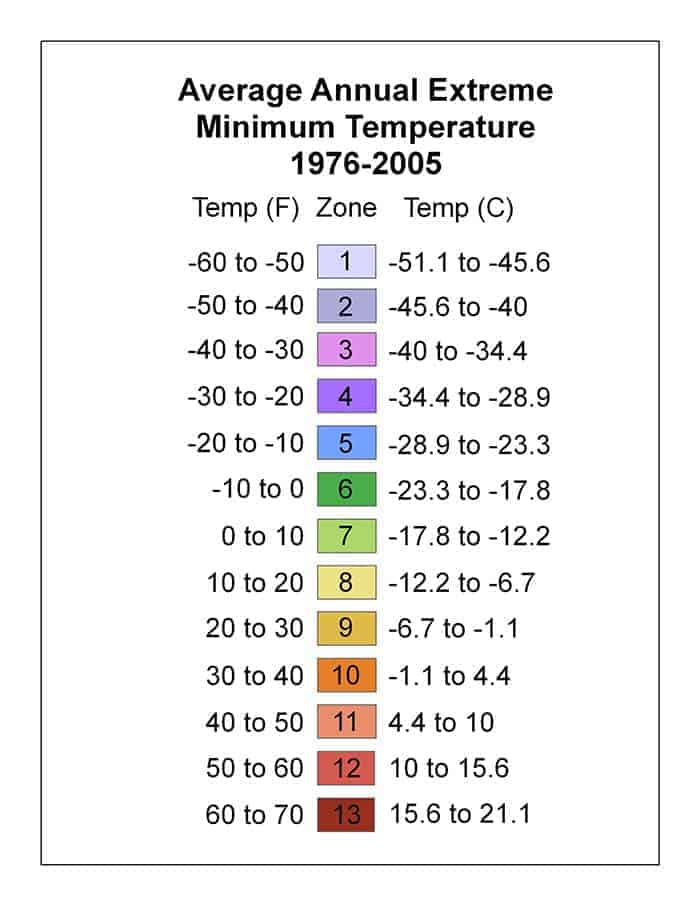
Zone Hardiness Cold: 4
Zone Hardiness warm: 7
Plant Type: Small Shrub
Height / Width: 1-2m/2-3m
Growth rate: medium
Vegetation type: decidious
Leaf /Flower color: green/yellow-green
Light
Conditions : Light Conditions
Unless a site is completely exposed, light conditions will change during the day and even during the year. The northern and eastern sides of a house receive the least amount of light, with the northern exsposure being the shadiest. The western and southern sides of a house receive the most light and are conidered the hottest exposures due to intense afternoon sun.
You will notice that sun and shade patterns change during the day. The western side of a house may even be shady due to shadows cast by large trees or a structure from an adjacent property. If you have just bought a new home or just beginning to garden in your older home, take time to map sun and shade throughout the day. You will get a more accurate feel for your site's true light conditions.
Conditions : Full to Partial Sun
Full sunlight is needed for many plants to assume their full potential. Many of these plants will do fine with a little less sunlight, although they may not flower as heavily or their foliage as vibrant. Areas on the southern and western sides of buildings usually are the sunniest. The only exception is when houses or buildings are so close together, shadows are cast from neighboring properties. Full sun usually means 6 or more hours of direct unobstructed sunlight on a sunny day. Partial sun receives less than 6 hours of sun, but more than 3 hours. Plants able to take full sun in some climates may only be able to tolerate part sun in other climates. Know the culture of the plant before you buy and plant it!
Watering
Conditions : Moist and Well Drained
Moist and well drained means exactly what it sounds like. Soil is moist without being soggy because the texture of the soil allows excess moisture to drain away. Most plants like about 1 inch of water per week. Amending your soil with compost will help improve texture and water holding or draining capacity. A 3 inch layer of mulch will help to maintain soil moisture and studies have shown that mulched plants grow faster than non-mulched plants.
Planting
How-to : Planting Shrubs
Dig a hole twice the size of the root ball and deep enough to plant at the same level the shrub was in the container. If soil is poor, dig hole even wider and fill with a mixture half original soil and half compost or soil amendment.
Carefully remove shrub from container and gently separate roots. Position in center of hole, best side facing forward. Fill in with original soil or an amended mixture if needed as described above. For larger shrubs, build a water well. Finish by mulching and watering well.
If the plant is balled-and-burlapped, remove fasteners and fold back the top of natural burlap, tucking it down into hole, after you've positioned shrub. Make sure that all burlap is buried so that it won't wick water away from rootball during hot, dry periods. If synthetic burlap, remove if possible. If not possible, cut away or make slits to allow for roots to develop into the new soil. For larger shrubs, build a water well. Finish by mulching and watering well.
If shrub is bare-root, look for a discoloration somewhere near the base; this mark is likely where the soil line was. If soil is too sandy or too clayey, add organic matter. This will help with both drainage and water holding capacity. Fill soil, firming just enough to support shrub. Finish by mulching and watering well.
Problems
Diseases : Verticillium or Fusarium Wilt
Wilts may be contracted through infected seed, plant debris, or soil. This fungus begins and multiplies during the cool, moist season, becoming obvious when weather turns warm and dry. Plants wilt because the fungus damages their water conducting mechanisms. Overfertilization can worsen this problem. Able to overwinter in soil for many years, it is also carried and harbored in common weeds.
Prevention and Control: If possible, select resistant varieties. Keep nitrogen-heavy fertilizers to a minimum as well as over-irrigating as they encourage lush growth. Practice crop rotation and prune out or better yet remove infected plants.
Fungi : Powdery Mildew
Powdery Mildew is usually found on plants that do not have enough air circulation or adequate light. Problems are worse where nights are cool and days are warm and humid. The powdery white or gray fungus is usually found on the upper surface of leaves or fruit. Leaves will often turn yellow or brown, curl up, and drop off. New foliage emerges crinkled and distorted. Fruit will be dwarfed and often drops early.
Prevention and Control: Plant resistant varieties and space plants properly so they receive adequate light and air circulation. Always water from below, keeping water off the foliage. This is paramount for roses. Go easy on the nitrogen fertilizer. Apply fungicides according to label directions before problem becomes severe and follow directions exactly, not missing any required treatments. Sanitation is a must - clean up and remove all leaves, flowers, or debris in the fall and destroy.
Pest : Caterpillars
Caterpillars are the immature form of moths and butterflies. They are voracious feeders attacking a wide variety of plants. They can be highly destructive and are characterized as leaf feeders, stem borers, leaf rollers, cutworms and tent-formers.
Prevention and Control: keep weeds down, scout individual plants and remove caterpillars, apply labeled insecticides such as soaps and oils, take advantage of natural enemies such as parasitic wasps in the garden and use Bacillus thuringiensis (biological warfare) for some caterpillar species.
Fungi : Leaf Spots
Leaf spots are caused by fungi or bacteria. Brown or black spots and patches may be either ragged or circular, with a water soaked or yellow-edged appearance. Insects, rain, dirty garden tools, or even people can help its spread.
Prevention and Control: Remove infected leaves when the plant is dry. Leaves that collect around the base of the plant should be raked up and disposed of. Avoid overhead irrigation if possible; water should be directed at soil level. For fungal leaf spots, use a recommended fungicide according to label directions.
Pest : Scale Insects
Scales are insects, related to mealybugs, that can be a problem on a wide variety of plants - indoor and outdoor. Young scales crawl until they find a good feeding site. The adult females then lose their legs and remain on a spot protected by its hard shell layer. They appear as bumps, often on the lower sides of leaves. They have piercing mouth parts that suck the sap out of plant tissue. Scales can weaken a plant leading to yellow foliage and leaf drop. They also produce a sweet substance called honeydew (coveted by ants) which can lead to an unattractive black surface fungal growth called sooty mold.
Prevention and Control: Once established they are hard to control. Isolate infested plants away from those that are not infested. Cosnult your local garden center professional or Cooperative Extension office in your county for a legal recommendation regarding their control. Encourage natural enemies such as parasitic wasps in the garden.
Miscellaneous
Conditions : Deer Tolerant
There are no plants that are 100% deer resistant, but many that are deer tolerant. There are plants that deer prefer over others. You will find that what deer will or will not eat varies in different parts of the country. A lot of it has to do with how hungry they are. Most deer will sample everything at least once, decide if they like it or not and return if favorable. A fence is the good deer barrier. You may go for a really tall one (7 to 8 feet), or try 2 parallel fences, (4 to 5 feet apart). Use a wire mesh fence rather than board, since deer are capable of wiggling through a 12 inch space.
Conditions : Pollution Tolerant
Air pollution is becoming a bigger problem each day. Pollutants in our air damage plants. The plants are damaged by absorbing sulfur dioxide, ozone, peroxyacetyl nitrate, ethylene, and nitrogen dioxide through their pores. Cell membrane damage may result in leaf drop, blotched or burnt looking leaves, or off-colored tissue between veins. Vehicles and industrial processes are the key culprits and conditions worsen on hot summer days. Though planting only pollution tolerant plants is not the solution to this problem, it is a visual bandaid. Your Cooperative Extension Service may have a list of plants that are more pollution tolerant in your area.
Conditions : Rabbit Tolerant
As cute as they are, rabbits can really damage a vegetable garden. Young, tender lettuce plants seem to be their favorite. If a free-roaming dog is not a possiblility for you, consider installing raised vegetable beds and covering tender shoots with netting. If you have ample room, you can opt to plant enough for you and the bunnies. Scents don't always repel animals, as they get used to them and are often washed off in the rain.
Conditions : Slope Tolerant
Slope tolerant plants are those that have a fibrous root system and are often plants that prefer good soil drainage. These plants assist in erosion control by stabilizing/holding the soil on slopes intact.
Conditions : Wind Tolerant
Plants that are wind tolerant usually have flexible, strong branches that are not brittle. Wind tolerant plants often have thick or waxy leaves that control moisture loss from whipping winds. Native plants are often the best adapted to not only wind, but also soil and other climatic conditions.
Conditions : Fall Color
Fall color is the result of trees or shrubs changing colors according to complex chemical formulas present in their leaves. Depending on how much iron, magnesium, phosphorus, or sodium is in the plant, and the acidity of the chemicals in the leaves, leaves might turn amber, gold, red, orange or just fade from green to brown. Scarlet oaks, red maples and sumacs, for instance, have a slightly acidic sap, which causes the leaves to turn bright red. The leaves of some varieties of ash, growing in areas where limestone is present, will turn a regal purplish-blue.
Although many people believe that cooler temperatures are responsible for the color change, the weather has nothing to do with it at all. As the days grow shorter and the nights longer, a chemical clock inside the trees starts up, releasing a hormone which restricts the flow of sap to each leaf. As fall progresses, the sap flow slows and chlorophyll, the chemical that gives the leaves their green color in the spring and summer, disappears. The residual sap becomes more concentrated as it dries, creating the colors of fall.
Glossary : Deciduous
Deciduous refers to those plants that lose their leaves or needles at the end of the growing season.
Glossary : Shrub
Shrub: is a deciduous or evergreen woody perennial that has multiple branches that form near its base.
Glossary : Heat Zone
The 12 zones of the AHS Heat Zone map indicate the average number of days each year that a given region experiences ""heat days"" or temperatures over 86 degrees F(30 degrees Celsius). That is the point at which plants begin suffering physiological damage from heat. The zones range from Zone 1 (less than one heat day) to Zone 12 (more than 210 heat days). The AHS Heat Zone, which deals with heat tolerance, should not be confused with the USDA Hardiness Zone system which deals with cold tolerance. For example: Seattle, Washington has a USDA Hardiness Zone of 8, the same as Charleston, South Carolina; however Seattle's Heat Zone is 2 where Charleston's Heat Zone is 11. What this says is that winter temperature in the two cities may be similar, but because Charleston has significantly warmer weather for a longer period of time, plant selection based on heat tolerance is a factor to consider.
Glossary : Plant Characteristics
Plant characteristics define the plant, enabling a search that finds specific types of plants such as bulbs, trees, shrubs, grass, perennials, etc.
Glossary : Medium Shrub
A medium shrub is generally between 3 and 6 feet tall.
Glossary : Flower Characteristics
Flower characteristics can vary greatly and may help you decide on a ""look or feel"" for your garden. If you're looking for fragrance or large, showy flowers, click these boxes and possibilities that fit your cultural conditions will be shown. If you have no preference, leave boxes unchecked to return a greater number of possibilities.
Glossary : Foliage Characteristics
By searching foliage characteristics, you will have the opportunity to look for foliage with distinguishable features such as variegated leaves, aromatic foliage, or unusual texture, color or shape. This field will be most helpful to you if you are looking for accent plants. If you have no preference, leave this field blank to return a larger selection of plants.
|
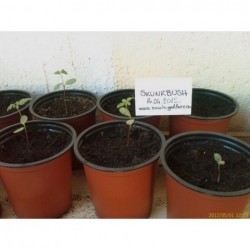
Sowing Instructions |
|
|
Propagation: |
Seeds |
|
Pretreat: |
pour over with hot water + Soak about 24 hrs |
|
Stratification: |
0 |
|
Sowing Time: |
all year round |
|
Sowing Depth: |
Just lightly cover with substrate |
|
Sowing Mix: |
Coir or sowing mix + sand or perlite |
|
Germination temperature: |
min. 20 ° C |
|
Location: |
bright + keep constantly moist not wet |
|
Germination Time: |
until it germinates |
|
Watering: |
Water regularly during the growing season |
|
|
|
Data sheet
A low deciduous shrub that offers attractive flowers in spring and bright fruits and foliage in fall, skunkbush sumac is native to western North America. In mid-spring before