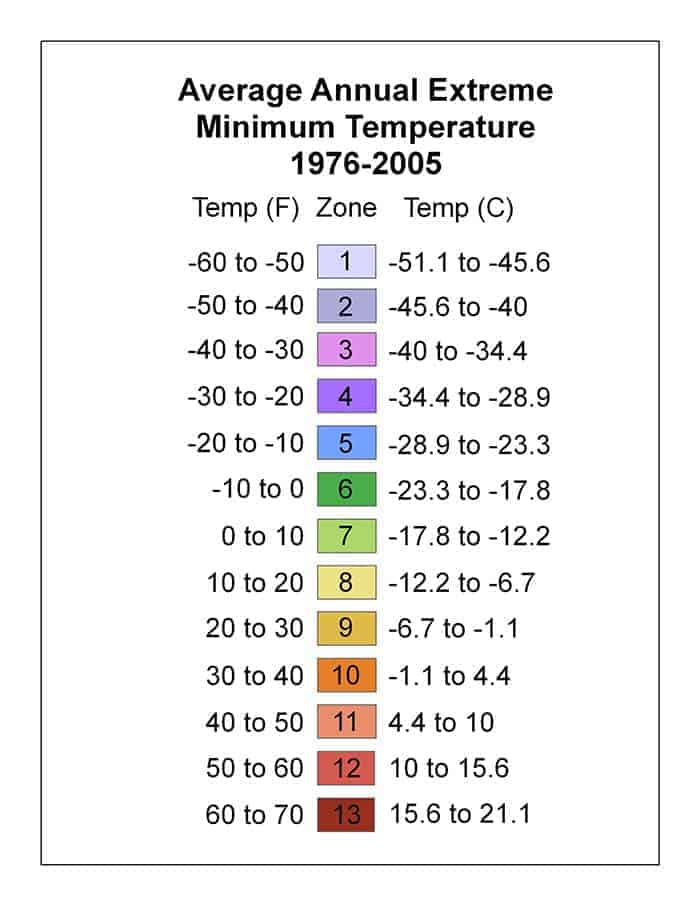

Plant resistant to cold and frost
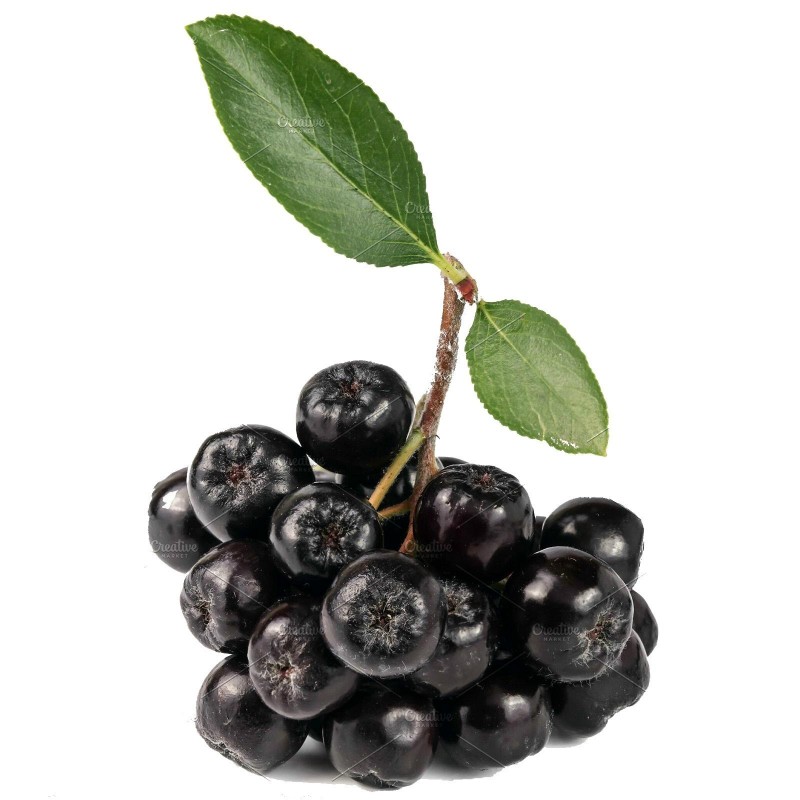
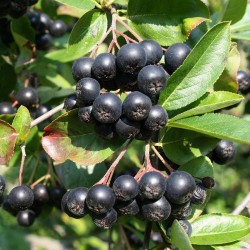
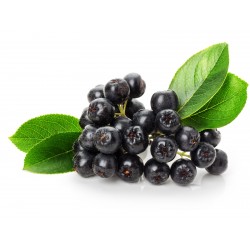
Aronia melanocarpa is an extraordinary medicine plant that has been developed in Poland. It has an incredible array of health qualities. Known as Chokeberry, the native Americans used it to prepare pemmican (dried meat). It has a higher concentration of vitamin C than blackcurrants, but it also contains a host of other valuable substances, especially antioxidants, polyphenols, bioflavonoids, and tannins. It is a very hardy and vigorous plant and can survive most conditions.
Aronia is a genus of deciduous shrubs, the chokeberries, in the family Rosaceae native to eastern North America and most commonly found in wet woods and swamps. The genus is usually considered to contain two or three species, one of which is naturalized in Europe.
Chokeberries are cultivated as ornamental plants and as food products. The sour berries, or Aronia berries, can be eaten raw off the bush, but are more frequently processed. They can be found in wine, jam, syrup, juice, soft spreads, tea, salsa, chili starters, extracts, beer, ice cream, gummies, and tinctures. The name "chokeberry" comes from the astringency of the fruits, which creates the sensation of making one's mouth pucker.
Chokeberries are often mistakenly called chokecherries, the common name for Prunus virginiana. Further adding to the ambiguity, a variety of Prunus virginiana is melanocarpa,[9] and readily confused with black chokeberry because it is commonly referred to as "black chokeberry" or "aronia". Aronia berries and chokecherries both contain polyphenolic compounds, such as anthocyanins, yet the two plants are distantly related within the family Rosaceae.
The leaves are alternate, simple, and oblanceolate with crenate margins and pinnate venation; in autumn the leaves turn a bold red color. Dark trichomes are present on the upper midrib surface. The flowers are small, with 5 petals and 5 sepals, and produced in corymbs of 10–25 together. Hypanthium is urn-shaped. The fruit is a small pome, with an astringent flavor.
Aronia has been thought to be closely related to Photinia, and has been included in that genus in some classifications,[10] but botanist Cornelis Kalkman observed that a combined genus should be under the older name Aronia.[11] The combined genus contains about 65 species.[12] In 2004, Kalkman expressed doubt about the monophyly of the combined group, and new molecular studies confirm this.[13][14] They do not place these two genera together or even near one another.
In eastern North America are two well-known species, named after their fruit color, red chokeberry and black chokeberry, plus a purple chokeberry whose origin is a natural hybrid of the two.[12] A fourth species, Aronia mitschurinii, that apparently originated in cultivation, is also known as Sorbaronia mitschurinii.
Aronia is considered cold hardy and heat tolerant in USDA Zones 3 to 8.[17][18] Aronia plants grow well both in orchard-type rows or set as landscape elements, including several varieties in 3 to 12 foot heights.[17]
The chokeberries are attractive ornamental plants for gardens. They are naturally understory and woodland edge plants, and grow well when planted under trees. Chokeberries are resistant to drought, insects, pollution, and disease. A number of cultivars, including A. arbutifolia 'Brilliant' and A. melanocarpa 'Autumn magic', have been selected for their striking fall leaf color.
An aronia wine is made in Lithuania. In Poland, aronia berries are added to jams and juices or dried to make a herbal tea sometimes blended with other ingredients, such as blackcurrant.[19] In Bosnia and Herzegovina, the berries are sold fresh and frozen or made into juices, jams and teas.[20] Aronia is also used as a flavoring or colorant for beverages or yogurts.[19] Juice from the ripe berries is astringent, semi-sweet (moderate sugar content), sour (low pH), and contains a low level of vitamin C.[21] The berries have a tart flavor and, in addition to juice, can be baked into breads.[19] In the United States and Canada, aronia juice concentrate is used in manufactured juice blends.
Aronia melanocarpa (black chokeberry) has attracted scientific interest due to its deep purple, almost black pigmentation that arises from dense contents of polyphenols, especially anthocyanins. Total polyphenol content is 1752 mg per 100 g dry weight,[22] anthocyanin content is 1480 mg per 100 g dry weight, and proanthocyanidin concentration is 664 mg per 100 g fresh weight.[23][24] These values are among the highest measured in plants to date. The black aronia species contains higher levels of anthocyanins than purple (Aronia prunifolia) or red aronia (Aronia arbutifolia), whereas red and purple aronia are richer in phenolic acid and proanthocyanins.[25]
The plant produces these pigments mainly in the leaves and skin of the berries to protect the pulp and seeds from constant exposure to ultraviolet radiation and production of free radicals.[26][27][28] By absorbing UV rays in the blue-purple spectrum, leaf and skin pigments filter intense sunlight, serve antioxidant functions and thereby have a role assuring regeneration of the species. Brightly colorful pigmentation also attracts birds and other animals to consume the fruit and disperse the seeds in their droppings.[26][29]
Analysis of polyphenols in chokeberries has identified the following individual chemicals (among hundreds known to exist in the plant kingdom): cyanidin-3-galactoside, cyanidin-3-arabinoside, quercetin-3-glycoside, epicatechin, caffeic acid, delphinidin, petunidin, pelargonidin, peonidin, and malvidin.[23][25][30] All these except caffeic acid are members of the flavonoid category of phenolics.
For reference to phenolics, flavonoids, anthocyanins, and similar plant-derived phytochemicals,[22] Wikipedia has a list of phytochemicals and foods in which they are prominent.
|
Sowing Instructions |
|
|
Propagation: |
Seeds |
|
Pretreat: |
soak in water for 8- 12 hours |
|
Stratification: |
1 months in moist sowing mix at 2-5 ° C refrigerator |
|
Sowing Time: |
all year round |
|
Sowing Depth: |
1 cm |
|
Sowing Mix: |
Coir or sowing mix + sand or perlite |
|
Germination temperature: |
20 ° C |
|
Location: |
bright + keep constantly moist not wet |
|
Germination Time: |
2-8 weeks |
|
Watering: |
Water regularly during the growing season |
|
|
|

Data sheet